
Retrofitting a Tree Lawn or Hell Strip with Water-Wise Plants
How to replace thirsty grass in the narrow strip between sidewalk and street with a tough, water-wise planting that looks good all year.
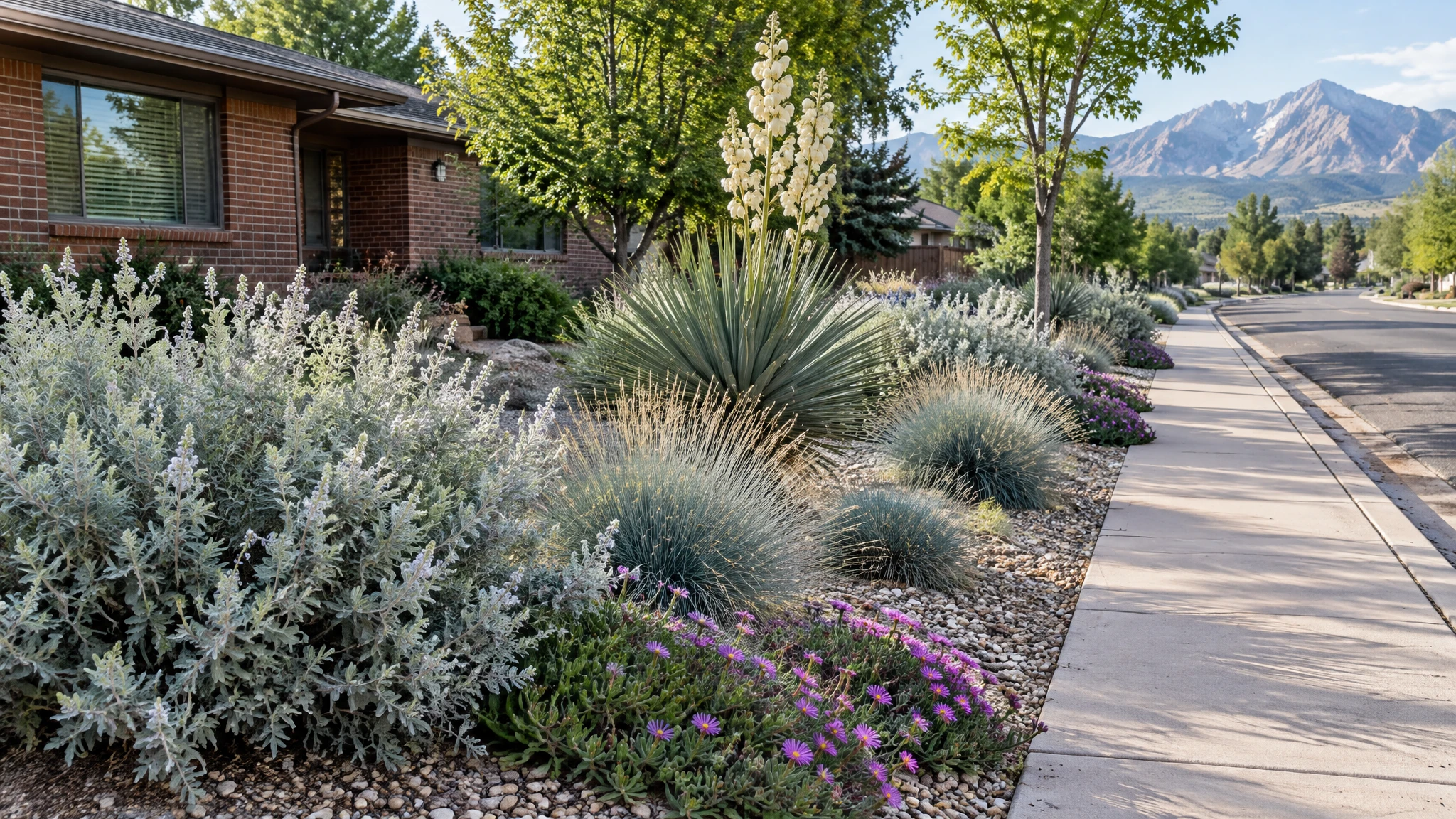
Almost every neighborhood has one: a narrow ribbon of grass between the sidewalk and the street. Depending on where you live it is called a tree lawn, a parkway, a street strip or, less kindly, a hell strip. It is hot, it is hard to water, and it is usually planted with the thirstiest grass in the yard.
The good news is that this small space is one of the easiest places to save water and effort. Northern Water, a Colorado water provider, notes that these strips can range from 2 to 10 feet wide and can be converted into attractive planting beds with water-wise, climate-appropriate plants.
This article draws on guidance from Northern Water, Plant Select and Colorado State University Extension, and shows how it can work in a small yard.
Why grass struggles in the strip
A street strip is a hard place to grow a lawn. Northern Water describes these narrow spaces as notoriously difficult to irrigate without overspray, so a lot of the water lands on pavement instead of roots. Because the strip is surrounded by hard surfaces, it also tends to run hotter than the rest of the yard, and snowpack, road salt and dog waste can build up there.
Plant Select makes a related point about width: strips of lawn less than 8 feet wide are tricky to water efficiently and are better suited to lower-growing, water-wise perennials and shrubs.
Upkeep adds up as well. Northern Water lists mowing, trimming around trees, fertilizing, weed control and aeration as the regular chores of a turf strip. Its water-wise street strip design needs water for the first two years and then only during long dry spells, and once established it needs only about 10 percent of the water Kentucky bluegrass does. That is a big change for a strip you may be watering and mowing all summer.
Before you dig: ownership, utilities and trees
Check a few things before you pick up a shovel. Northern Water points out that cities typically own street-strip landscapes even when homeowners are required to maintain them, so find out what your city or town allows you to plant there.
Underground lines often run beside or beneath these strips. Call 811, the call-before-you-dig line, before any digging, and ask a qualified professional if you are unsure about anything buried in the strip.
If the strip has a tree, treat the tree as part of the design. Colorado State University Extension notes that street trees are often predisposed to poor growth because of poor soils and cramped growing areas, and that tree health and life span suffer when a planting strip is under 8 feet wide. Do not disturb the roots of an existing tree. The Denver Botanic Gardens' Western best practices flyer advises planting under established trees one plant at a time, amending the soil for each plant rather than working the whole area, and finishing with a very fine wood mulch. For questions about the tree itself, a certified arborist or your local Extension office is the place to start.
Plan for foot traffic and the car door
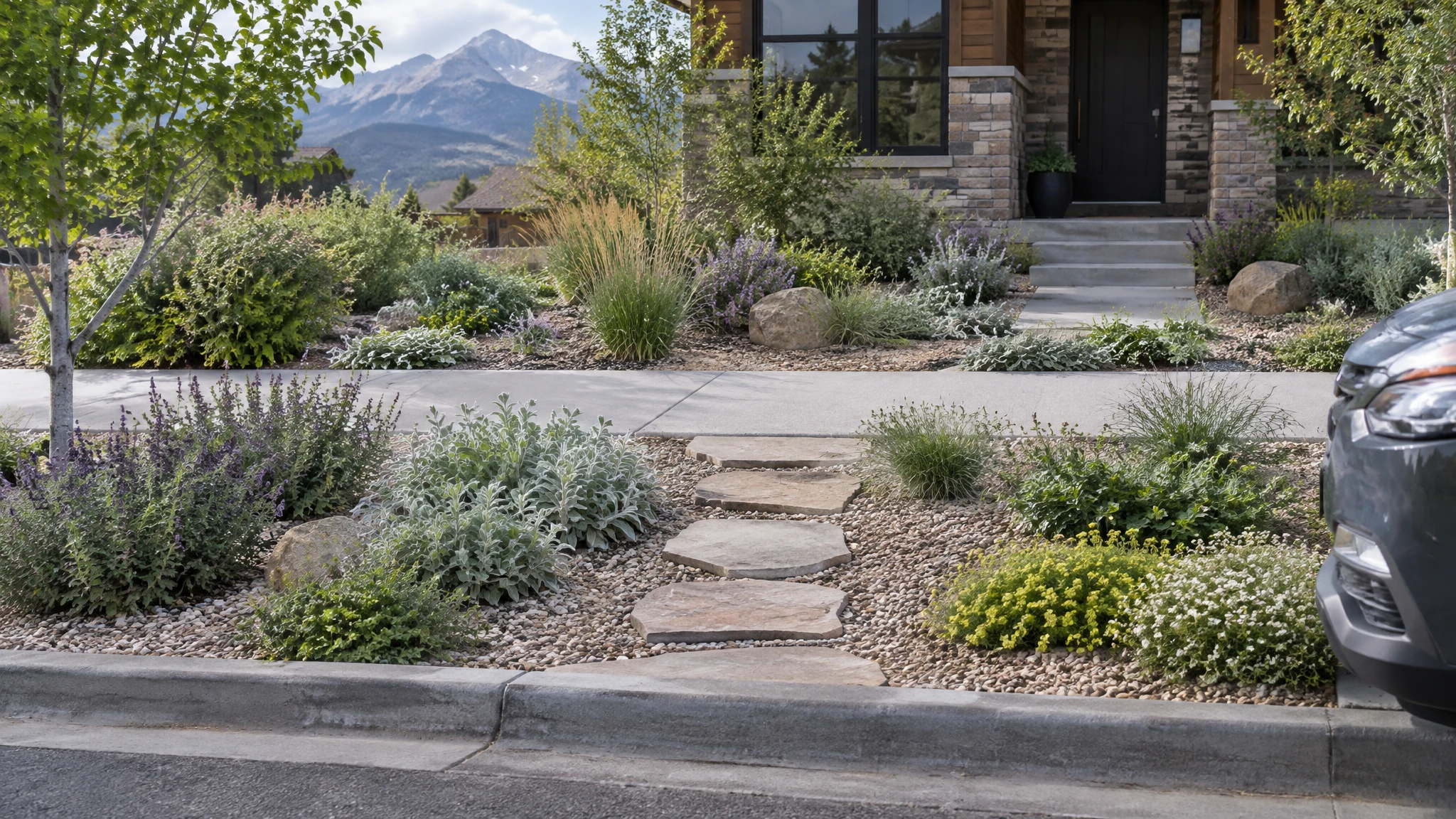
A strip is not only planting space. It is also where people step out of parked cars, where the mail carrier cuts across and where the dog likes to walk. Northern Water recommends planning places that allow for stepping out of cars parked along the street, which reduces wear and tear on the plants.
In a small yard, that can be as simple as a short path of flat stepping stones or a band of gravel at each parking spot, with planting on either side. CSU Extension makes a general point about ground covers: few tolerate repeated foot traffic, so build a walkway through the area before planting rather than hoping a path will not form on its own.
Keep the planting low near corners and driveways so drivers and walkers can see clearly, and save taller grasses and shrubs for the sidewalk side or the middle of a wider strip. If you are not sure what height your city expects at your address, ask the city before you plant.
Prepare the soil and take out the turf
Start by taking the grass out. Northern Water suggests removing enough soil to make room for any amendments the planting needs. Begin with removing existing turf, vegetation and mulch, which can be done mechanically. If you are thinking about a product to kill grass or weeds, ask your local Extension office what is appropriate and follow the label rather than relying on a general article.
Most plants that suit a street strip prefer lean, well-drained soil. Northern Water's planting tips call for adding an aggregate such as squeegee, a fine crushed rock, or expanded shale, and for at least 30 percent aggregate in planting holes where the soil is high in clay. The Denver Botanic Gardens flyer describes a 3-inch layer of inorganic amendment, sized one-quarter inch and smaller, with the backfill mixed half and half with the same material.
Compost has a place for plants that are not xeric, but it is not the default here. If you are unsure what is in your strip, a soil test will tell you more than guessing, and our soil testing article explains how to take a good sample.
Plants for a hot, dry strip
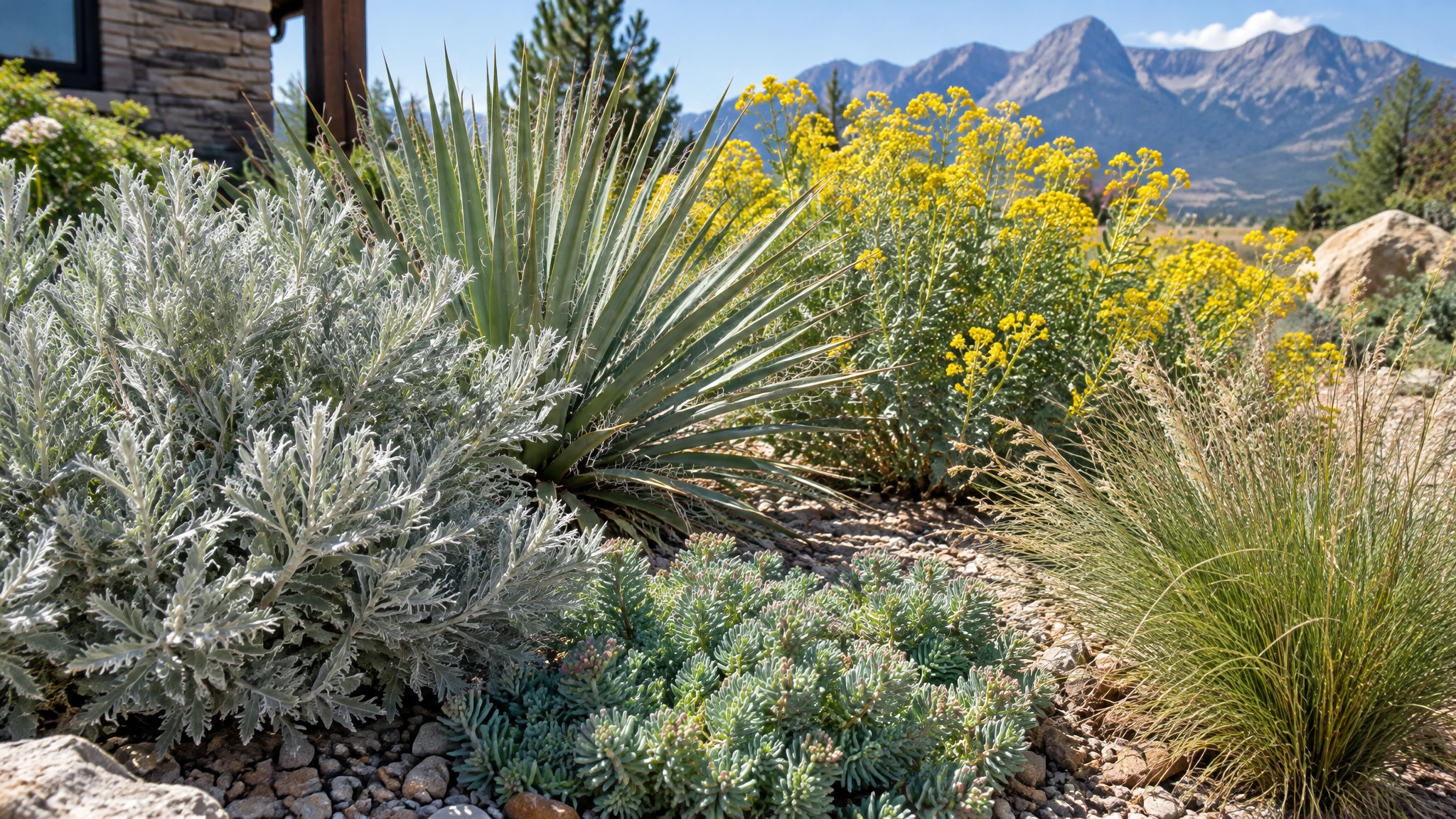
Some regionally appropriate plants include autumn sapphire sage, chocolate flower, desert blue star, fringed sage (Artemisia frigida), Mexican feather grass, sideoats grama grass, soapweed yucca (Yucca glauca), sulphur flower, turquoise tails sedum, white evening primrose and yellow false yucca. With grasses, silver foliage, evergreen structure and flowers in the mix, there is something to look at in most seasons, as well as supporting our pollinator friends.
Additional plant recommendations from CSU Extension's include: common yarrow (Achillea millefolium), pussytoes (Antennaria parvifolia), fringed sage, blue grama grass (Bouteloua gracilis), prairie winecups (Callirhoe involucrata) and ice plant (Delosperma). CSU's xeric ground cover guidance names parking strips among the places where plants like these are a good fit.
Plant small, mulch with gravel and water with drip
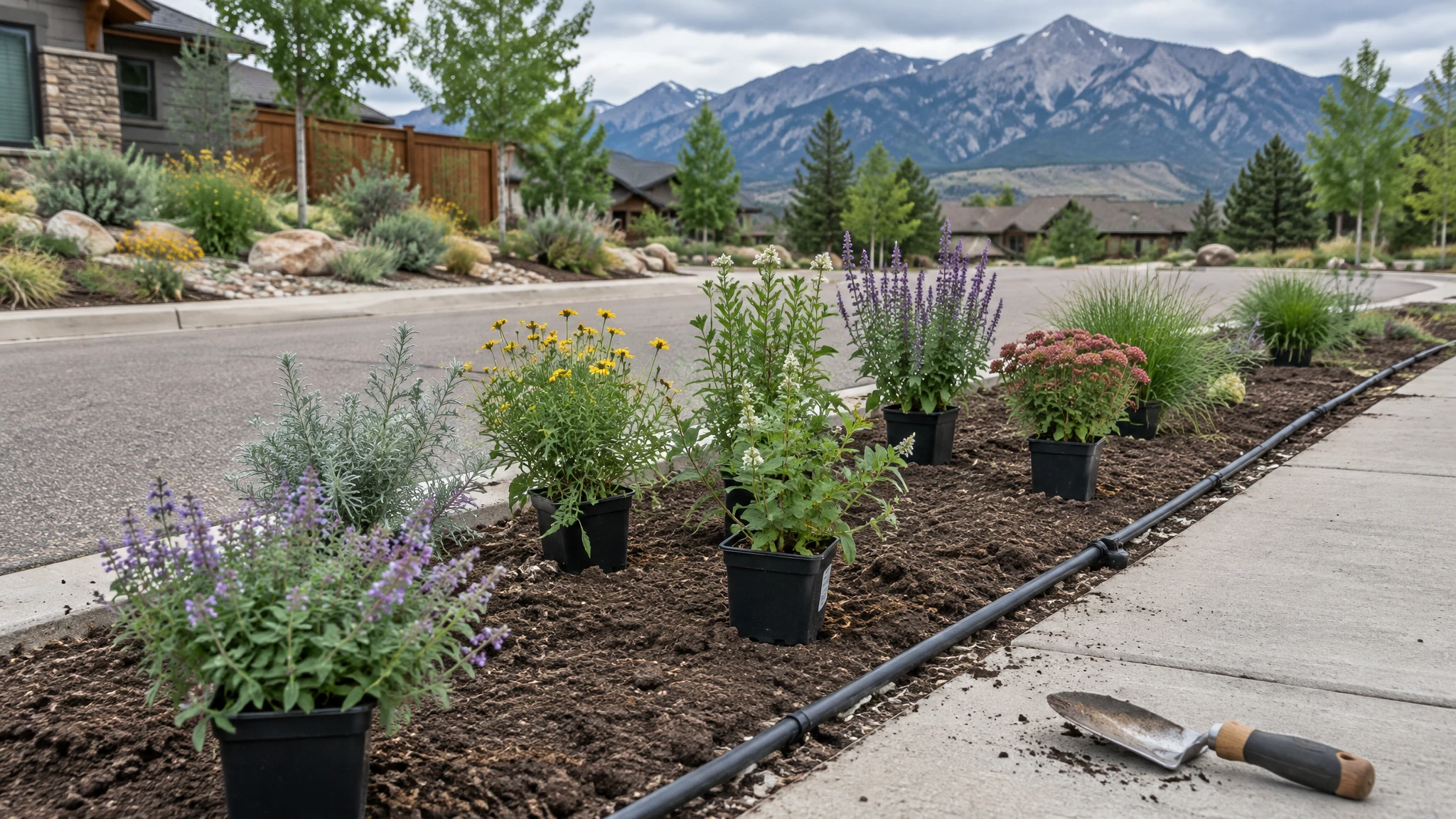
Smaller plants are a bargain in a strip. Northern Water's planting tips recommend 4-inch pots rather than 1-gallon containers for perennials, and 1-gallon rather than 5-gallon shrubs, because smaller plants establish faster and cost less.
For mulch, Northern Water recommends at least 2 inches of squeegee, up to 4 inches to prevent weeds from germinating, and suggests a cobble border to keep the squeegee from escaping onto the sidewalk. Rock / gravel mulch works best when the stones are small, no more than about half an inch across, and that you do not need weed barrier fabric under it.
If your strip has spray irrigation heads, it is recommended to convert to drip irrigation where possible or water by hand u til established and disable the irrigation zone at your controller. Plant Select reminds us that hydrozoning has a last step people skip: after grouping plants by water need, you adjust the irrigation system to match, so do not leave the old turf schedule running.
On cost, Northern Water reports that conversions average roughly $11 per square foot, based on 2023 grant projects, and cautions that project costs vary greatly. Get your own quotes before you plan a budget.
Give it two years, then enjoy the easy part
A strip planting looks best when it reads as a decision. Repeat a few plants in groups, edge the bed cleanly and keep the mulch topped up. Expect the first two years to take some attention: check the water, pull weeds while the plants fill in, and replace anything that did not make it.
After that, the design Northern Water describes needs water only during long dry spells, so the strip mostly looks after itself, with a tidy-up each spring. Because the strip is the first thing people see from the street, a little care goes a long way.
If you would like to see what a water-wise strip could look like beside your own sidewalk, you are welcome to start a free design preview with us. Choose Tree Lawn as your location, describe your yard or share a photo, and we will show you a concept to react to. For questions about what is allowed in the strip, your city is the right place to ask.
Article co-authored with AI and referencing Colorado State University Extension, Plant Select, or others as cited
What could your yard become?
Bring your space and your ideas. Start with a free design preview.
Start your free preview and unlock your custom plan for $19