
Low-Water Native Plants for Colorado Gardens
Match Front Range natives to your soil, sun and watering so what you plant survives its first summer and thrives on rainfall by year three.
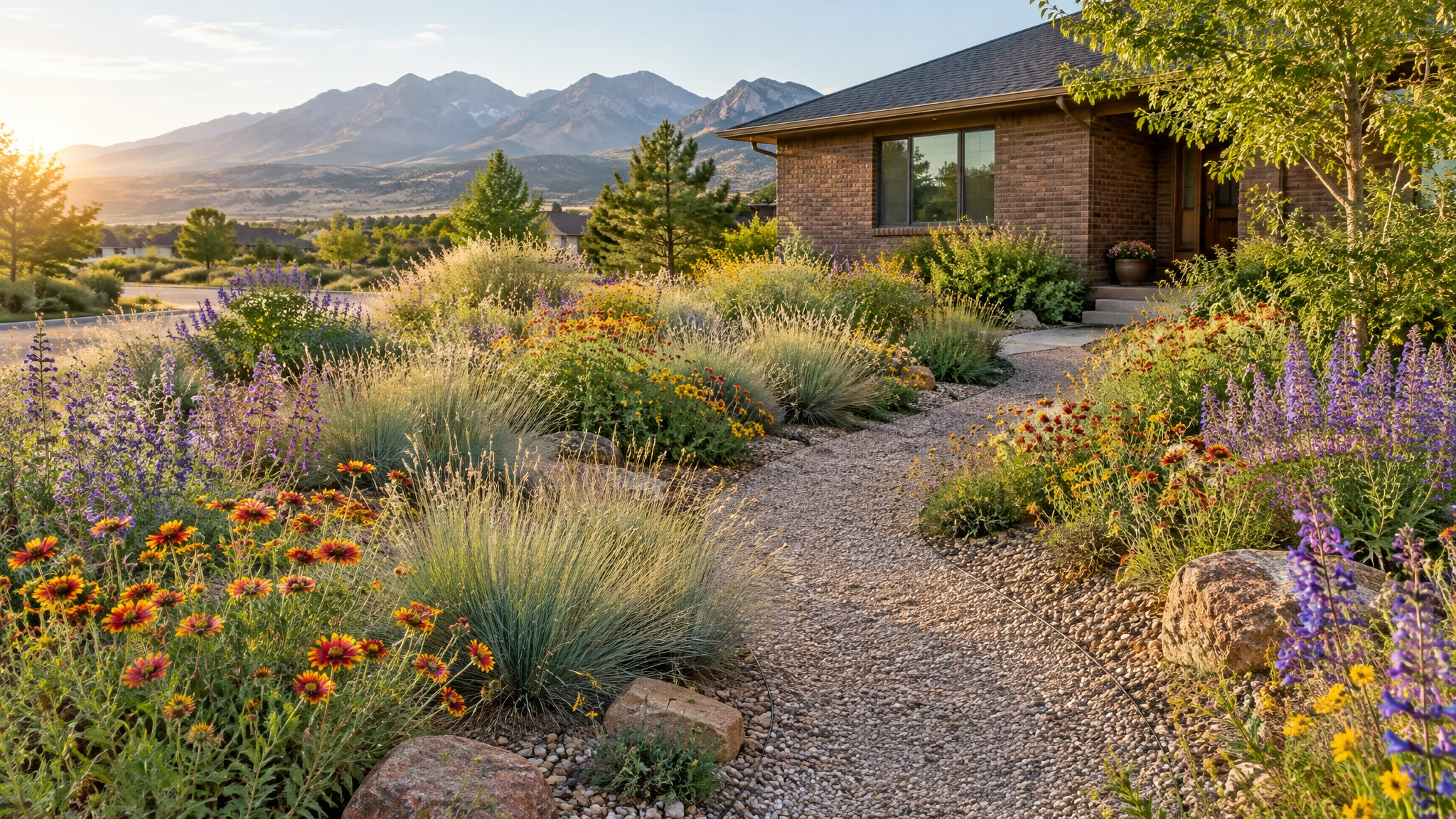
Key takeaways
- Match each native to your soil type: clay-tolerant species like western wheatgrass and blanket flower rot in fast-draining sand, while blue grama and penstemons struggle in heavy clay.
- Most Colorado natives need regular water only through their first growing season; by year three many survive on rainfall alone.
- Overwatering kills more Front Range natives than drought, so skip soil amendments and plant in lean clay.
- Plant in early fall or by mid-May in spring, never June, so roots establish before Front Range heat.
- Check USDA cold hardiness, not just drought-tolerant labels, since many xeric perennials sold locally die at -10°F to -20°F snaps.
The best low-water native plants for Colorado gardens are the ones matched to your specific soil, sun exposure, and watering capacity, not a generic top-10 list. This guide pairs each Front Range native with the clay or sandy soil, sun conditions, and first-year water needs it tolerates, so what you plant survives past its first summer.
Which low-water natives actually thrive in Front Range clay vs. sandy soils?
Most Front Range yards sit on clay, but pockets of sand and gravel show up near foundations, in older beds, and along the foothills. Matching the plant to the soil matters more than picking a "drought-tolerant" label, because a native that survives clay will often rot in fast-draining sand and vice versa. Colorado State University Extension's fact sheets on xeriscaping and native plant water needs group plants by water use and soil tolerance, which is the fastest way to sanity-check any list.
Clay-tolerant natives
Clay holds water and compacts, so you want natives that handle slow drainage: western wheatgrass, prairie smoke, blanket flower, and big bluestem all manage it. Avoid lavender and many penstemons here; they need sharp drainage.
Sandy/gravel-tolerant natives
Fast-draining soil suits deep-rooted species: threadleaf giant hyssop, prairie coneflower, blue grama, and most penstemons thrive. These will struggle in heavy clay without amendment.
How to confirm what you have before buying
Grab a handful of moist soil and squeeze it. If it holds a ribbon, you have clay; if it crumbles, you have sand or gravel. If you are working from a design plan with a plant list, check each species against your soil type before ordering. Our winterizing guide covers how soil drainage also affects first-winter survival.
| Condition | Best-fit natives | Skip these |
|---|---|---|
| Heavy clay | Western wheatgrass, prairie smoke, blanket flower | Lavender, sand-loving penstemons |
| Sandy/gravel | Blue grama, prairie coneflower, threadleaf hyssop | Big bluestem (prefers moisture) |

How do you match native plants to your yard's sun and exposure?
A south- or west-facing wall in a small Front Range yard can run 10-15°F hotter than the air around it, especially against brick, concrete, or south-facing siding. That reflected heat kills plants that would survive the same exposure in an open bed.
Hot, reflected-heat spots
Against south and west walls, choose natives that handle both sun and heat bounce: rabbitbrush, purple prairie clover, and prickly pear cactus. Save these tough plants for the tightest, hottest strip of your yard.
Part-shade corners
North and east exposures get gentler morning light and afternoon shade. Here you can use plants that scorch in full western sun: wild geranium, Western sword fern in moister spots, and kinnikinnick on the drier edge. These are also the corners where a small pollinator patch pays off (see our guide to attracting pollinators to a small yard).
Wind and elevation considerations
Front Range yards above roughly 6,000 feet get stronger sun intensity and colder nights. Exposed corners need wind-tolerant natives like serviceberry or big bluestem rather than broad-leafed perennials that shred by August.
How much water do Colorado natives need after their first year?
Year-one watering schedule
Most Front Range natives need regular water the first growing season, then very little after. Water deeply once or twice a week through the first summer, taper in fall, and resume only during dry stretches in year two. By the third season, many can survive on rainfall alone.
Natives that thrive on rainfall alone once established
The long-term water needs vary more by plant than most people expect, and getting this right matters more than soil amendments. Colorado State University Extension notes that many native plants tolerate clay soils but fail from overwatering, not drought, which is why matching species to your irrigation plan matters. Once established, blue grama, prairie smoke, and sun-loving penstemons handle dry spells without supplemental water. Blanket flower and little bluestem also do fine unwatered in most Front Range yards. Plants with deeper roots, like serviceberry and chokecherry, need an occasional deep soak during multi-week droughts but nothing routine. If you want a design plan that pairs each plant with its long-term water needs, Yucca & Co. builds that into the plant list.
Which native plants give color across the growing season, not just spring?
Most small yards bloom hard in May, then go all-green by July. The fix is sequencing: pick plants whose bloom windows hand off to each other, so something is always flowering from April through October.
Spring bloomers
Start with pasque flower and golden banner for April-May color, then prairie smoke for its pink late-spring blooms and wispy seed heads. These fade just as summer plants fill in, so the handoff looks planned rather than bare.
Summer workhorses
Blanket flower and Missouri primrose bloom hardest in June and July, right when spring species quit. Purple poppy mallow and showy milkweed carry color into August. This is where a soil test pays off, since blanket flower handles lean, sandy spots while milkweed wants your heavier clay (see our guide to soil testing for small yards).
Fall and seed-head interest
By September, rely on gayfeather (blazing star) spikes and rabbitbrush's yellow bloom. After frost, grasses like little bluestem turn copper and seed heads catch snow, keeping the yard visually alive into winter without any watering.

Which low-water natives also support Front Range pollinators?
Best natives for bees and butterflies
Several plants already in your condition-matched list double as pollinator workhorses. Bee balm and blanket flower draw bees and butterflies through summer, while serviceberry feeds early pollinators before most perennials wake up. Milkweed is the one plant monarch caterpillars can eat, so if your yard gets full sun, it earns a spot on its own. CSU Extension's pollinator gardening fact sheet lists bloom calendars you can use to check your plant list covers spring through fall.
Grouping plants for pollinator visibility
Bees find dense patches more easily than scattered singles. Plant three to five of each species together rather than dotting one plant here and there, which matters more in a small yard where every square foot counts. Repeat each grouping twice if space allows. Our strategies guide shows how layered groupings fit a compact bed.

How do you establish native plants so they survive the first summer?
When to plant
Plant in early fall or early spring, not June. Fall-planted natives grow roots into cool soil while tops stay dormant, so they enter next July with twice the root mass. Spring planting works too, but finish by mid-May before Front Range heat arrives.
Mulch and soil prep
Skip soil amendments. Most natives prefer lean clay and will flop or rot in enriched beds. Dig a hole twice the root width, water the hole before planting, then mulch 2-3 inches deep with gravel or shredded bark, keeping mulch an inch off the crown.
First-summer care checklist
- Water deeply twice a week for the first month, then once a week unless it's over 90°F
- Water at dawn, at the base, never overhead
- Hand-pull weeds weekly; they steal moisture fast
- Expect some wilting in the first July, even on established-looking plants

What should you avoid planting despite being labeled 'drought-tolerant'?
Drought-tolerant but not cold-hardy
Nursery tags describe water needs, not winter survival. Lavender, some salvias, and many "xeric" perennials sold along the Front Range are rated for warmer zones and die back at -10°F to -20°F cold snaps common from Fort Collins to Colorado Springs. Check the USDA hardiness rating, not just the drought label, and favor species that overwinter reliably at 5,000 feet or above. CSU Extension notes that even drought-tolerant natives need consistent watering through establishment before they can handle dry conditions, so a plant that survives the first summer on a watering schedule can still fail its first January.
Aggressive spreaders to skip
Russian sage, some ornamental grasses like ribbon grass, and Siberian cypress-adjacent spreaders such as snow-in-summer can colonize a small bed within two seasons. In compact yards, one aggressive plant crowds out everything on your plant list. Skip anything described as "self-seeds freely," and check the Colorado noxious weed list before buying.
How do you turn a plant list into a small-yard design plan?
Zoning a small yard by water need
Group plants by irrigation zone before you dig: highest-water natives nearest the hose or drip line, full-drought species at the far edges. In a compact yard this usually means three zones, not five. It also means you can hand-water one bed without soaking the xeric plants next to it, and clay and sandy spots in the same yard end up with the plants that suit each.
Getting a plan without the $1,000+ designer fee
A design concept does the layout thinking for you: plant heights against fences, bloom timing across the season, spacing at maturity. Yucca & Co. gives you a free preview of your yard's concept before you pay anything, and the full custom design plan only if you want it. You still do the digging yourself.
FAQ
What are the best low-water native plants for a small Front Range yard?
The ones matched to your specific conditions. In heavy clay, plant western wheatgrass, prairie smoke, and blanket flower. In sandy or gravelly spots, use blue grama, prairie coneflower, and threadleaf hyssop. Against hot south or west walls, pick rabbitbrush, purple prairie clover, or prickly pear. Sequence bloom times so something flowers April through October.
Do Colorado native plants need fertilizer or amended soil?
No. Most natives prefer lean clay and will flop or rot in enriched beds, so skip soil amendments entirely. Dig a hole twice the root width, water it before planting, and mulch 2-3 inches deep with gravel or shredded bark, keeping mulch an inch off the crown. Overwatering kills more natives than drought does.
Can I plant low-water natives in the fall in Colorado?
Yes, and fall is often the better window. Fall-planted natives grow roots into cool soil while tops stay dormant, entering the next July with roughly twice the root mass of spring plantings. Early spring also works if you finish by mid-May, before Front Range heat arrives. Avoid June planting altogether.
How far apart should I space native plants in a xeriscaped yard?
Space them at mature width, not the cramped nursery-tag spacing, so air moves between plants and roots don't compete for scarce moisture. Group three to five of each species together rather than dotting singles around, and repeat each grouping twice if space allows. Dense patches also help bees find the flowers.
Which native grasses work instead of a lawn on the Front Range?
Blue grama suits sandy or gravelly soil and survives on rainfall alone once established. Western wheatgrass handles heavy clay, and little bluestem works in most Front Range yards, turning copper after frost for winter interest. Big bluestem prefers more moisture but tolerates wind on exposed corners above 6,000 feet.
Article co-authored with AI and referencing Colorado State University Extension, Plant Select, or others as cited
What could your yard become?
Bring your space and your ideas. Start with a free design preview.
Start your free preview and unlock your custom plan for $19