
Attracting Pollinators to a Small Yard: Bees, Butterflies and Blooms All Season
How to give bees and butterflies food, water, shelter and space in even a small Colorado yard, with plants for every season.
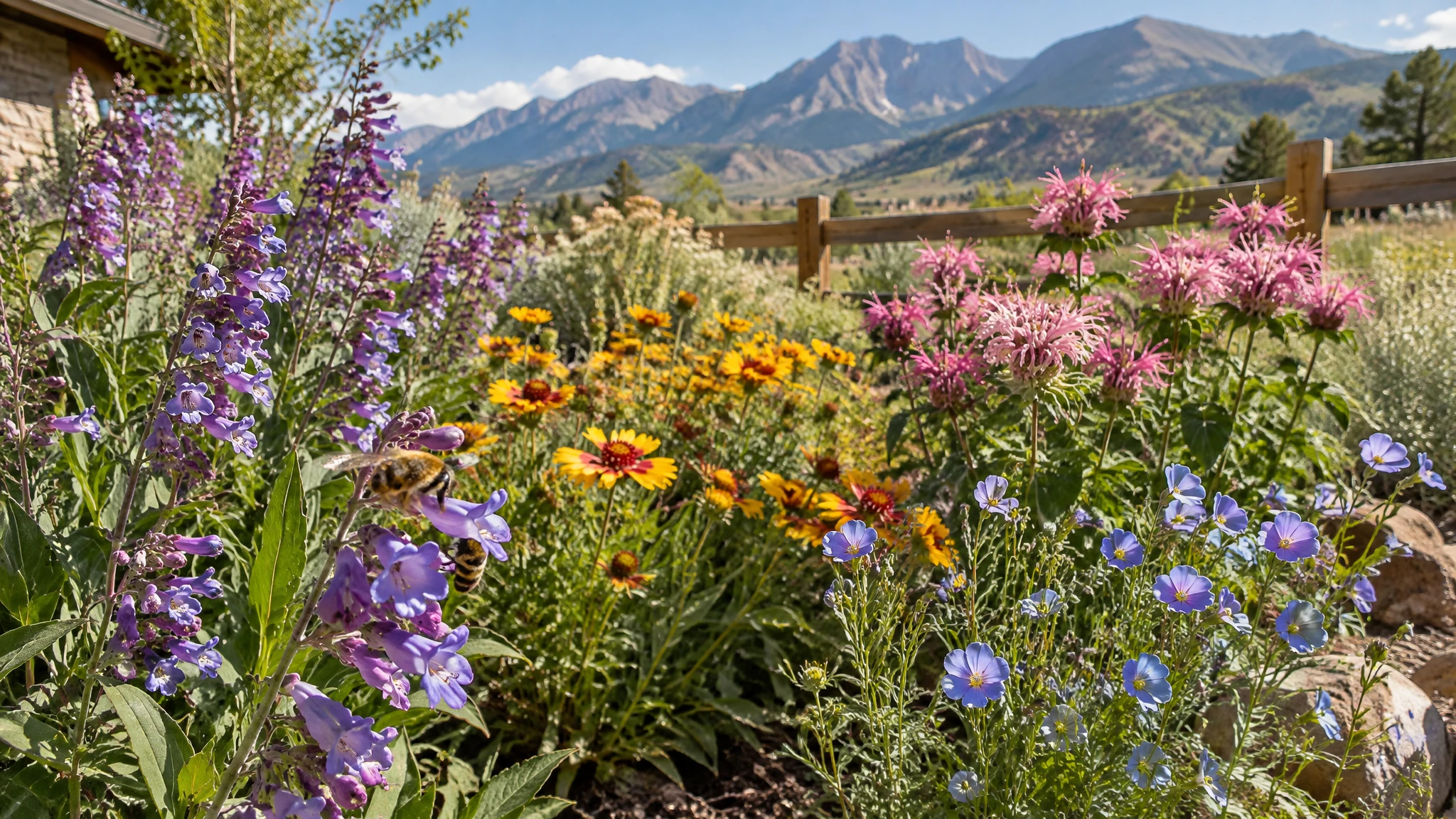
Pollinators are the quiet workers of any garden and can include bees, beetles, flies, moths, butterflies, hummingbirds and bats, and that more than 70 percent of the world's flowering plants rely on pollination to produce fruit and seeds.
You do not need acres to help. A small yard, a patio planter or even a strip along a fence can become a stepping stone for pollinators moving through a neighborhood. Home gardens, parks, community gardens and prairies as all being able to provide pollen and nectar, and says they can serve as refuges for pollinators foraging across lawns and farmland.
This article draws on CSU Extension's guidance on creating pollinator habitat, attracting native bees and attracting butterflies, and shows how those ideas can fit a small space.
Food, water, shelter and space
Pollinators needs can be summed up in four words: food, water, shelter and space. Together these make up habitat, and creating habitat, in the words of the guide, is something everyone can do to support pollinators in their area.
Food means nectar and pollen from flowers. Water can be as simple as a shallow dish. Shelter means places to nest and rest, from bare soil to hollow stems to layered plantings. Space is the hardest in a small yard, but it can be borrowed: the guidance notes that large, connected habitats are better than small, patchy ones, and suggests asking whether you can connect your front yard and backyard with flowering plants.
Even if your neighbors do not garden for pollinators, your plants still matter. Each yard that offers flowers adds to the network, and pollinators move easily across property lines.
Plan blooms from early spring to late fall
If one idea matters most, it is continuity. It is recommended to provide a mixture of plant species whose bloom times range from early spring to late fall, so that flowers are available throughout the pollinator activity season. A garden that blooms spectacularly for three weeks and then goes quiet leaves hungry visitors behind.
The guide offers sample plants by season. For the early season, it lists blue flax (Linum lewisii), pasque flower (Pulsatilla patens), chokecherry (Prunus virginiana) and penstemons (Penstemon species). Mid-season choices include asters, yarrow (Achillea millefolium), showy milkweed (Asclepias speciosa), harebells (Campanula rotundifolia), blanket flower (Gaillardia aristata) and salvias, as well as flowering trees such as linden and willows.
For late in the season, it suggests blue giant hyssop (Agastache foeniculum), Rocky Mountain bee plant (Cleome serrulata), plains coreopsis (Coreopsis tinctoria), common sunflower (Helianthus annuus), goldenrod (Solidago species) and rabbitbrush (Chrysothamnus nauseosus). The best plants vary across Colorado with climate, soil, elevation and water, so check with a local nursery for what suits your area.

Why native plants are worth the space
A Xerces Society study noted that native plants are four times more attractive to native bee species than introduced ornamentals. That makes sense, since native bees and native plants evolved together.
In a small yard, this does not mean giving up everything else. Many natives are well-behaved garden plants, with compact forms, long bloom periods and low water needs, and they sit comfortably beside traditional favorites. The Plant Select program, a collaboration that includes Colorado State University and the Denver Botanic Gardens, highlights plants that thrive in our region, and many are good for pollinators.
A design tip: mix your natives into the front of a border, not only the back. Shorter plants such as penstemon and harebell give you color at eye level, while taller ones like goldenrod and sunflower can anchor a corner. Layering, with trees and shrubs as the structure and perennials, grasses and ground covers beneath, mimics the way plants grow in nature and gives pollinators more places to feed and shelter.
Plant in drifts, not single specimens
Pollinators work efficiently and planting groups or swaths of each species, rather than single plants, lets a bee or butterfly work one area thoroughly instead of flying around to find the next flower of the same kind.
The guidance also notes that flower structure matters. Bees tend to focus on flowers of similar shape, so grouping bell-shaped flowers together and flat, disk-shaped flowers together suits their habits. Flower size matters too: large native bees prefer flowers sized to match, and small bees can work small flowers more effectively.
In a small yard, a drift can be as modest as three to five plants. Repeat the same few species through the space, in clumps of different sizes, and you will get both a calmer design and a more useful one for visiting insects. Sunny spots are best as most pollinators prefer sunny areas, so put your main flower display where the light is strongest.
Butterflies need more than nectar
Butterflies have two garden needs. Adults feed on nectar from flowers, but before that, caterpillars need specific host plants. Most butterflies develop on particular plants: Monarch caterpillars develop only on milkweed, and black swallowtail caterpillars feed on parsley, dill and close relatives. Providing the host plants lets females lay eggs, and gives you a chance to see butterflies at every stage.
For the adults, the guide recommends a large patch of one flower species to attract and keep butterflies, and flowers that bloom in sequence so nectar is available over a longer season. Plants it lists include asters, bee balm, butterfly weed, cosmos, gaillardia, rabbitbrush, sunflowers, verbena and zinnias.
Colorado State University research also mentions that most butterflies like some shelter from the strong winds common along the Front Range, while still wanting open, sunny areas. A windbreak or a fence can help. And it observes that a very manicured garden discourages some butterflies, because many develop on wild plants. A garden that feeds caterpillars may look a little less tidy, but it will be more alive.

Water, nesting spots and a lighter touch
Water is easy to add - a shallow dish filled with pebbles and water, so bees and other insects can land and drink without drowning. Drain and refill the dish every few days to avoid harboring mosquito larvae. Bees will also drink from common irrigation sources such as drip systems.
Nesting is a surprise to many gardeners. Most native bees are solitary rather than living in hives, and many nest in the ground. Take caution against covering all open ground in a nesting area, since that would stop ground-nesting bees from tunneling into the soil. Leaving a small patch of bare, well-drained soil in a sunny spot is one simple way to help. Other native bees, such as mason and leafcutter bees, nest in hollow stems or cavities, and the guide describes nesting boxes for them, which need regular upkeep to keep mold, pathogens and pests from harming the bees.
Finally, go easy on chemicals and use insecticides sparingly if at all because most are not compatible with attracting butterflies and can harm caterpillars and non-target insects, and it warns against spraying chemicals near water sources such as birdbaths or fountains. For pest questions, your local Extension office can suggest alternatives.
A pollinator plan for a small space
Putting it together in a small yard might look like this. Start with the structure: perhaps one small flowering tree or shrub, such as chokecherry. Add a sunny border or island of perennials in drifts, chosen so that something is in bloom from spring through fall. Tuck in a host plant or two for caterpillars, and leave room for a pebble dish and a small patch of open soil.
If you have only a patio, containers can carry the same ideas. Group a few pots of one species together, choose plants that bloom at different times, and keep a water dish nearby.
Think of the first season as an experiment. Watch which plants draw the most visitors, note when the garden goes quiet, and add something to fill the gap next year. Gardeners are encouraged to learn about native bees, which can easily go unnoticed because of their solitary habits. Once you start looking, you will see them everywhere.
If you would like a design that works pollinator habitat into your own space, you are welcome to start a free design preview with us. Describe your yard or share a photo, and we will show you a concept to react to.

What could your yard become?
Bring your space and your ideas. Start with a free design preview.
Start your free preview and unlock your custom plan for $25